
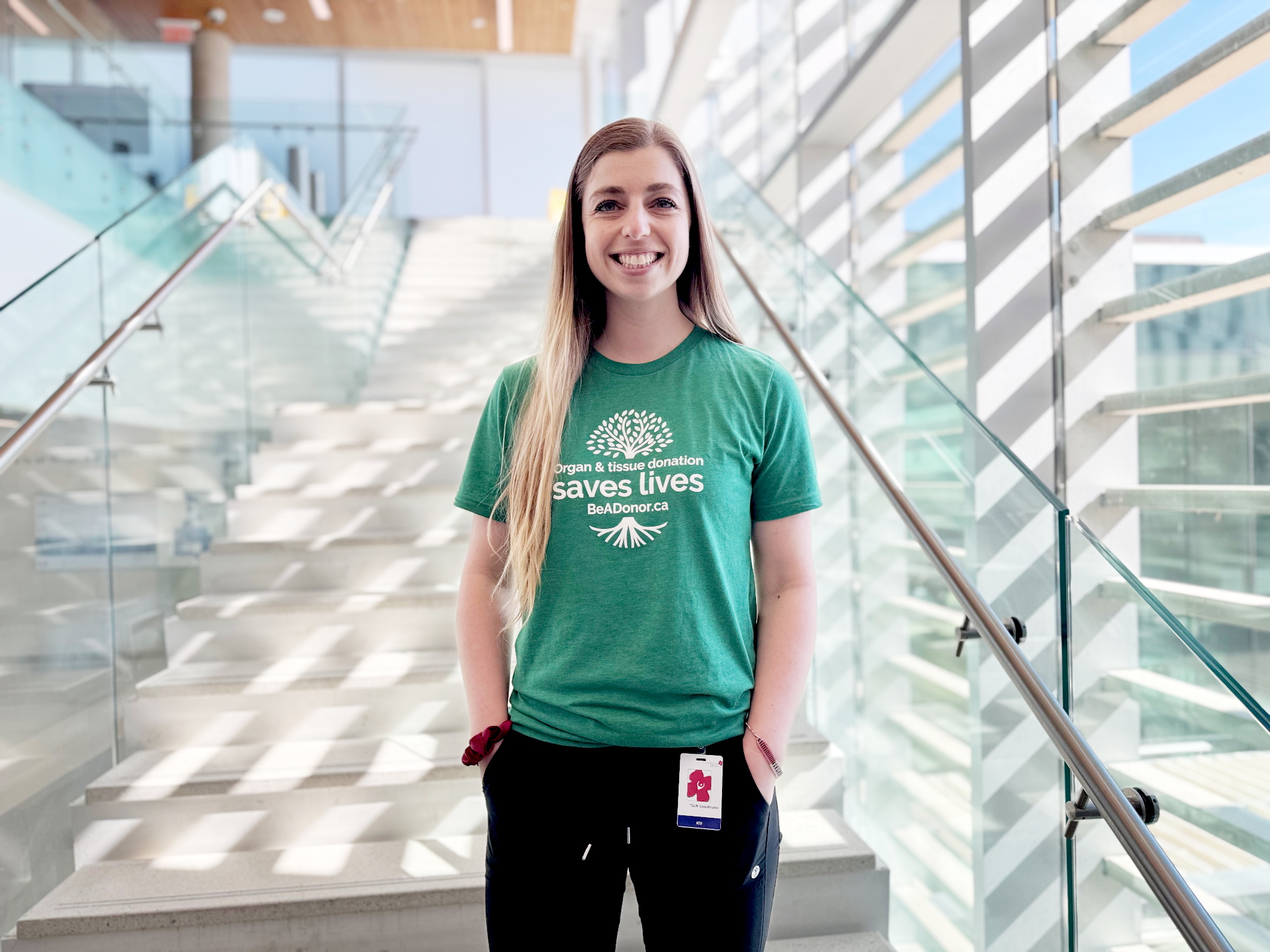
Even at the end, something meaningful can begin—which is when Emma K. connects with families for the first time.
As a Specialist, Organ and Tissue Donation with Trillium Gift of Life Network (TGLN), Emma helps families understand donation on the worst day of their life. The initial meeting with families “can sometimes feel intimidating” she admitted. “I’ve learned that you go into those conversations to offer an opportunity.”
However, the topic of donation is never easy. For families, the discussion can make losing their loved one feel more real. For Emma, it’s about helping them move through that moment—because she’s been through it herself.
Emma was first exposed to donation when a family member needed a double-lung transplant while she was in university. That donation gave them a second chance and added years to their life. “My family became quite supportive of donation after that.”
Helping people always came naturally to Emma. She began her nursing career in mental health before transitioning into critical care. Her career, however, took a pivot after she experienced a devastating loss of her own.
“In my own grief, I struggled to make sense of things,” she shared, “I think it is human nature to try to find meaning or something positive in a horrible situation, but I couldn’t.” Emma went on to say, “I kept wondering if something positive had come from this situation, how that might have helped with the weight of the grief that I and my family continue to carry.”
As a nurse in the ICU, she was often surrounded by families facing a similar struggle. She realized she wanted to do more for them and she needed a change.
Her background in mental health gave her experience talking to people in crisis or going through a difficult time— “I knew I could help other families find some meaning in their loss.”
Today, Emma works with patients and their families at end of life: “Death is often unexpected and it is a constant reminder that life is short. Sometimes it can feel heavy, but I get to support families through it.”
She found a new purpose. And while meeting with families during an incredibly difficult time isn’t always easy and some are not always receptive to the idea of donation —"it might not be for them, and that’s okay—some just need you to listen and offer emotional support because they’re heart broken—which is something I understand.”
When she’s not interacting with families across the hospitals she supports, she works closely with care teams. At CMH, she helps update order sets, supports policy development, provides education and is a resource to the teams. She even offers debriefs for staff on donation cases.
When donation cases do happen, CMH and TGLN work closely together. “You never know what a family’s experience may be when you walk into a room,” she said. “It’s not that uncommon to meet a family who’s been touched by donation in some way. But regardless of the outcome, I’m grateful I can support them in their grief.”
Many support organ and tissue donation, but not everyone is registered. Be A Donor Month’s campaign aims to close the gap by offering opportunities to learn more, talking to your family, and registering your choice. Register or check your registration status today at beadonor.ca.