

Cambridge Memorial Hospital (CMH) is taking part in a national Scale AI initiative focused on improving discharge planning and patient flow.
The project brings together Humber River Health, Cambridge Memorial Hospital, Niagara Health, SE Health, DischargeHUB and Deloitte. Collaboratively, the group is exploring how predictive analytics and artificial intelligence can help care teams identify, earlier in a patient’s stay, who may need more support to leave hospital safely.
One area of focus is Alternate Level of Care, often called ALC. This happens when a patient no longer needs acute hospital care, yet cannot move safely to their next care setting. This may be due to the need for rehabilitation, home supports, community services, long-term care or other arrangements.
The goal of this work is not to replace clinical judgement. Instead, the AI tool is being designed to support care teams by giving them earlier information that may help with planning, referrals and coordination. The hope is that by identifying discharge complexity sooner, teams can act earlier while more care options may still be available.
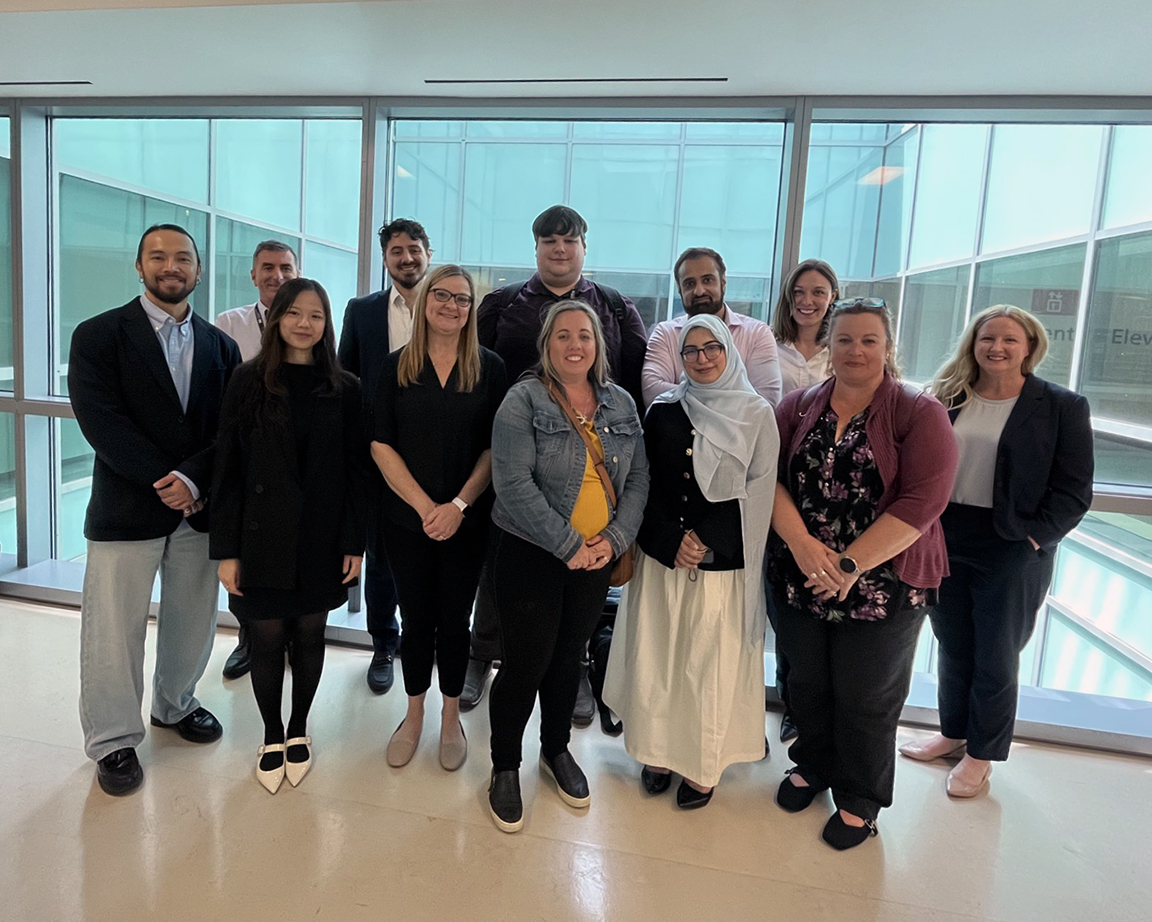
CMH has already participated in two consortium workshops, one at Deloitte’s Toronto office and one at Humber River Health. These sessions brought partners together to review the approach, discuss how the tool could fit into real hospital workflows, and consider how it could be adapted across different care settings.
CMH’s role is to bring the perspective of a community hospital. This includes sharing local insight on discharge planning, patient flow, care coordination, data needs and how predictive tools could support existing team-based discussions. As part of future pilot planning, CMH expects to explore how the model could support electronic discharge huddle boards, where teams already review patient status, barriers to discharge and next steps.
For patients and families, the long-term benefit of this innovative tool is simple: better planning, earlier conversations and smoother transitions from hospital to the next stage of care. For staff and physicians, the initiative may help support more proactive decision-making and better use of available resources.
This work is an example of CMH contributing to new ideas while staying focused on what matters most: safe, coordinated and patient-centred care for our community.